Every year, thousands of various drugs, treatments, and therapies are being tested on animals before they even reach humans. For decades, that has been the standard path of biomedical research. But there has always been a problem hiding in plain sight: animals are not humans.
A treatment that works in mice could completely fail in people. A drug that looks safe in the lab can still cause dangerous side effects in human trials. This disconnect has slowed medical progress for years, making drug development more expensive, less efficient, and often less accurate than researchers would like.
Now, scientists are building something that could change that completely: AI-powered organ-on-a-chip systems.
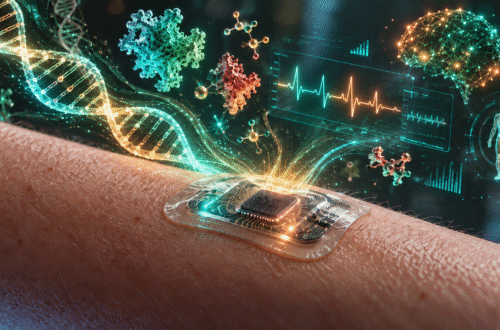
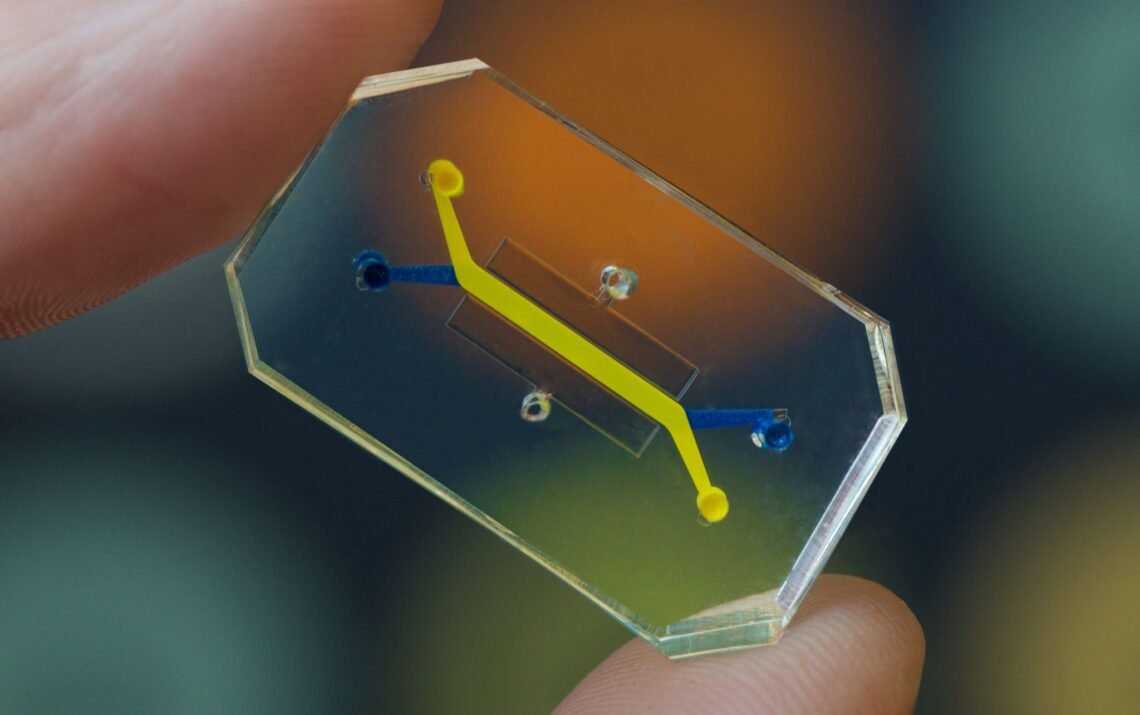
These tiny devices, sometimes only the size of a small USB stick, are designed to mimic the behavior of real human organs using living cells, microfluidic channels, and highly controlled biological environments. When artificial intelligence is added into the process, these chips become even more powerful, helping researchers analyze huge amounts of biological data, predict drug responses, and uncover patterns that traditional methods might miss.
It sounds futuristic, but it is already becoming one of the most exciting frontiers in biotechnology.
What exactly is an organ-on-a-chip?
An organ-on-a-chip is a miniature device engineered to recreate the function of human tissues or organs on a very small scale. Instead of relying on a full animal model, scientists can grow human cells inside a chip and expose them to realistic conditions such as flowing fluids, mechanical stress, and chemical signals.
For example, a lung-on-a-chip can simulate breathing motions. A heart-on-a-chip can model cardiac tissue contractions. A liver-on-a-chip can be used to study how the body processes drugs. Rather than looking at biology from far away, researchers can observe human-like responses in a controlled and measurable way.
That alone is already impressive. But the real leap happens when AI enters the picture.
Where AI changes everything
These chip systems generate enormous amounts of data. Scientists can track cell movement, electrical activity, protein expression, metabolic changes, and tissue responses over time. Sorting through all of that manually would be slow and incredibly difficult.
Artificial intelligence helps by finding patterns across complex biological signals much faster than traditional analysis. It can identify early signs of toxicity, compare how different tissues respond to the same treatment, and even help predict how a patient’s body might react before a drug ever enters a clinical trial.
In other words, AI does not just make organ-on-a-chip systems faster. It makes them smarter.
Instead of simply asking, “Did the cells survive?”, researchers can ask much deeper questions:
How did the cells change?
What hidden signals appeared before damage became visible?
Could this drug behave differently in another type of patient?
What happens when multiple organ systems interact?
That is where this technology starts to feel less like a lab tool and more like the beginning of a new biomedical model.
Why this could replace animal testing
Animal testing has been valuable for many years, but it has limitations that are becoming harder to ignore. Human diseases are incredibly complex, and animal biology often does not mirror human biology closely enough. That means researchers can spend years and millions of dollars testing something that ultimately does not work in humans.
Organ-on-a-chip systems offer a more human-relevant alternative. Since they are built using human cells, they may provide more realistic information about how real organs respond to drugs, toxins, and diseases. This could reduce the number of failed clinical trials, improve drug safety screening, and help researchers make better decisions earlier in development.
If these systems continue improving, they may not only reduce dependence on animal testing but also create a completely better standard for biomedical research.
What makes this tecchnology especially exciting is that it reflects a larger shift happening across science. Researchers are no longer just observing biology. They are beginning to recreate it in highly controlled, measurable, and intelligent systems.
That changes the role of experimentation itself.
Instead of treating the body as something too complex to model outside of a living organism, scientists are now building miniaturized versions of its most important functions. They are combining engineering, biology, and computation into one platform. With AI layered on top, these platforms can become predictive systems, not just observational ones.
That means future drug development may become:
- more personalized
- more efficient
- more ethical
- more accurate
And that is a huge deal.
Challenges still remain
Of course, this technology is not perfect yet.
Researchers still need to improve standardization, scalability, and reproducibility. Not every chip model behaves exactly the same way, and proving long-term reliability is essential before these tools can fully replace older systems. There is also the challenge of convincing regulators, companies, and the broader scientific community to adopt them widely.
But that is true of almost every major scientific breakthrough in its early stages. The most important point is that this is no longer just an idea. It is becoming a serious, rapidly advancing field with real momentum.
Why this matters for the future
To me, AI-powered organ-on-a-chip systems represent more than just a clever invention. They show what happens when science stops accepting outdated limitations and starts building better models of life itself.
For years, researchers have been forced to work with imperfect stand-ins for human biology. Now, they are getting closer to studying the real thing in ways that are dynamic, data-rich, and deeply intelligent.
That could change how we test medicines.
It could change how we understand disease.
And it could change how quickly life-saving treatments reach the people who need them.
Animal testing has defined biomedical research for generations.
But the future may fit on a chip.