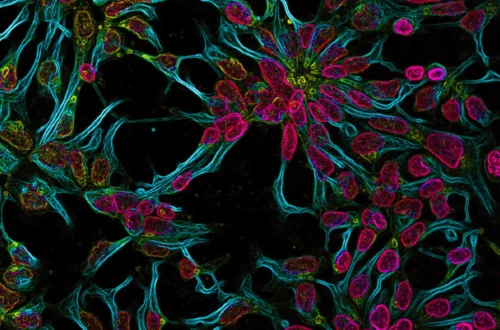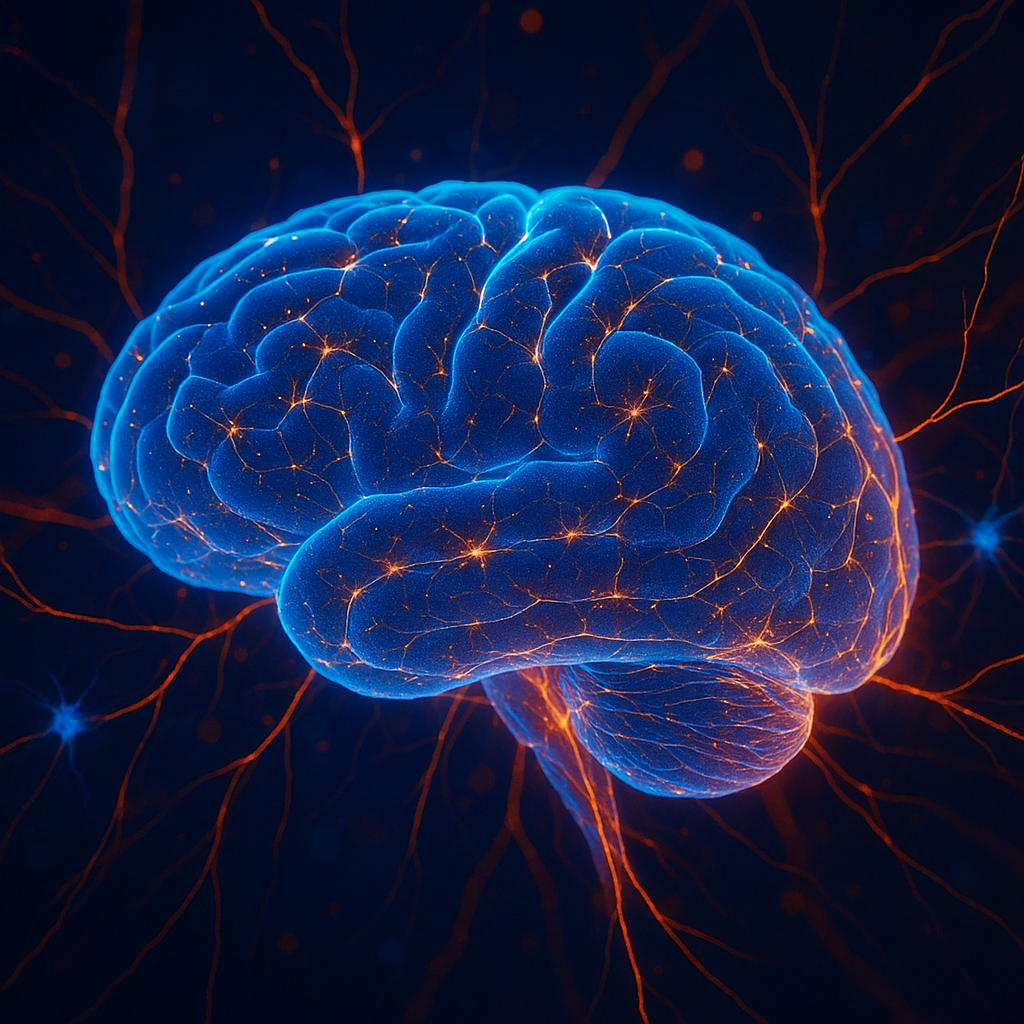
Imagine being able to study the human brain — with its stunning complexity — in a dish. Scientists at MIT have now made this a reality with a new 3D brain tissue platform called Multicellular Integrated Brains, or miBrains. This breakthrough has the potential to transform how we understand neurological diseases, test new medicines, and ultimately help millions of patients around the world.
miBrains are miniature human brain tissue models which are grown from induced pluripotent stem cells (iPSCs) — these are special human cells reprogrammed into a stem-cell-like state. From these versatile cells, researchers produce all six major cell types found in the human brain, including:
- Neurons — the brain’s signaling cells
- Astrocytes — support cells that regulate neurotransmission
- Microglia — immune cells of the brain
- Oligodendrocytes — cells that form myelin (insulation)
- Endothelial cells — lining of blood vessels
- Pericytes — blood vessel support cells
miBrains is unique due to all the diverse cell types that are assembled together in a three-dimensional structure that recreates many features of actual human brain tissue. Unlike older models that contain only one or a few cell types, miBrains actually fully mimic the actual real cellular environment in the brain, including the various interactions between neurons, blood vessels, and immune cells — a major advantage for studying complex diseases.
Why miBrains Matter
1. A Better Model for Human Brain Biology
Traditional 2D cell cultures and animal models have limitations. Two-dimensional systems lack the complex architecture of real tissue, and animal brains differ from humans at genetic and physiological levels. miBrains bridge that gap by offering a human-derived, 3D tissue model scientists can use to study real human biology
2. Personalized Disease Research
Because miBrains are grown from a donor’s own cells, they can be personalized to a patient’s genetic makeup. That means researchers can study individual-specific disease mechanisms and responses to drugs — a major leap forward for precision medicine.
3. Drug Discovery and Testing
miBrains can be scaled up for use in laboratories around the world, making them a powerful tool for high-throughput drug screening. Scientists can observe how potential therapeutics interact with multiple brain cell types at once and even across patient-specific genetic backgrounds.
In their first application, researchers used miBrains to study the APOE4 gene variant, known to increase Alzheimer’s disease risk. Within miBrains, the team observed pathological changes — such as increased amyloid and phosphorylated tau proteins — that closely resemble hallmarks of Alzheimer’s progression. Because miBrains include interacting cell types, they provided clues about how immune cells and astrocytes collectively contribute to disease. This kind of insight was difficult to obtain with older models, showing how miBrains can illuminate disease processes in ways never before possible.
What’s Next for miBrains?
The research team plans to enhance miBrains further by incorporating features such as microfluidic blood flow and more detailed molecular profiling. These improvements could make the models even closer to real human brain function and improve their use in studying complex neurological disorders.
In the future, miBrains could help scientists:
- Discover new drug targets
- Test drug delivery across the blood-brain barrier
- Understand how genetic differences influence disease
- Accelerate therapy development for conditions like Alzheimer’s, Parkinson’s, and ALS
miBrains are part of a broader evolution in biomedical research, where 3D, patient-specific tissue models are replacing simplistic lab systems and bridging the translational gap between lab discoveries and human clinical outcomes. These advances promise a future where drug discovery is faster, safer, and more tailored to individual patients