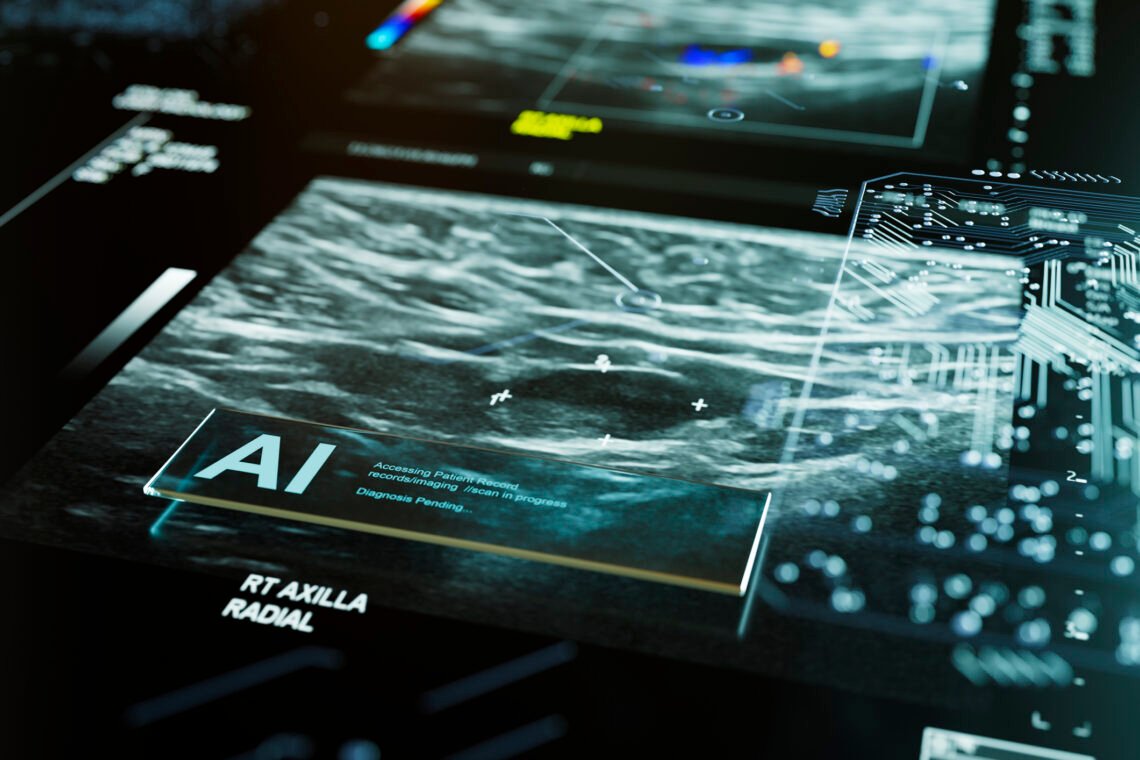
Most medical tests are designed to answer one urgent question: Is something wrong at this moment? A mammogram, for example, is usually used to detect whether breast cancer is already visible. But what if the same image could actually do something that is way more powerful? What if it could help to predict which individuals may be at a higher risk of developing breast cancer years before a tumor can be seen?
That is the idea behind Mirai, a deep learning model developed by researchers connected to MIT, Massachusetts General Hospital, and collaborators. Instead of only searching for cancer in the present time, Mirai can be used to analyze mammogram images to estimate a patient’s future breast cancer risk over multiple years. In other words, it can cause a shift in screening simply from detection to prediction. Mirai was trained on more than 200,000 mammography exams from Massachusetts General Hospital and validated on datasets from the United States, Sweden, and Taiwan.
This matters because breast cancer screening has always involved a difficult balance. If someone misses a screening, they may be at risk of developing cancer which may go undetected until their next mammogram. Which causes it to give more time to grow and become harder to treat. Whereas if one starts screening too often, patients may start to have unnecessary anxiety, false positives, extra imaging, biopsies, and costs. A more personalized approach could help doctors decide who needs closer monitoring and who may not need as much intervention.
Traditional breast cancer risk models often depend on pieces of information such as family history, age, genetics, and breast density. These factors are important; however, they do not give us the entire story. Many people who develop breast cancer do not have a family history or any known genetic mutations. This is where Mirai tries to find risk signals directly inside the mammogram itself, including subtle tissue patterns that may be too complex for the human eye to interpret and understand.
In early studies, Mirai performed better than older clinical risk models. MIT reported that the model identified nearly twice as many future cancer diagnoses in a high-risk group compared with the Tyrer-Cuzick model, a commonly used clinical risk tool. The researchers also reported that Mirai performed similarly across different parameters such as race, age, and breast-density groups in the MGH test set, which is important because medical AI must be tested for fairness and generalizability.
One of the most important parts of Mirai’s story is validation. A model may work well in one hospital but may fail when used with different machines, populations, or even clinical workflows. In a multi-institutional validation study, Mirai maintained accuracy across globally diverse screening populations from seven hospitals in five different countries, which overall suggests that image-based AI risk prediction may have broader clinical potential.
But Mirai also raises an important question: Can doctors trust an AI model if they cannot fully see how it makes all of the decisions? Like many deep learning systems, Mirai has often been described as a “black box.” A later model called AsymMirai tried to make this more interpretable by studying whether differences between the left and right breast tissue could explain part of Mirai’s reasoning. Researchers found that localized bilateral dissimilarity appeared to approximate some of Mirai’s predictive power, suggesting that asymmetry in breast tissue may be one signal which the model uses.
Recent research also shows why careful testing is still necessary. A 2026 study in npj Digital Medicine evaluated four breast cancer risk algorithms, including Mirai, on 112,621 negative mammograms from two UK NHS screening sites. The models showed useful prediction ability, but the performance level truly varied, and the authors emphasized the need for prospective trials and possible fine-tuning before broad deployment across different systems.
That is the bigger lesson: Mirai is not magic, and it is not a replacement for doctors. It is simply a tool which can help clinicians make better decisions when combined with medical judgment, patient history, and follow-up care. In the future, a patient’s mammogram may not only say, “No cancer detected today,” but also help answer, “How closely should we watch this patient over the next five years?”
This is where AI in medicine becomes revolutionary, as the best use of AI may not be replacing physicians but instead giving them a sharper lens. Mirai shows how a routine medical image can contain more information than we once realized. A mammogram may not just be a snapshot of the present. With the right model, it may become a window into future risk.
For patients, that could mean earlier prevention, more personalized screening, and fewer rushed decisions. For medicine, it represents a shift toward predictive healthcare: finding risk before disease becomes obvious.
Mirai’s name means “future” in Japanese. In this case, the name fits. It is not just an AI model reading mammograms. It is a glimpse of a future where healthcare becomes more personal, more preventive, and hopefully more equitable.