What if doctors could test a treatment on a virtual version of you first?
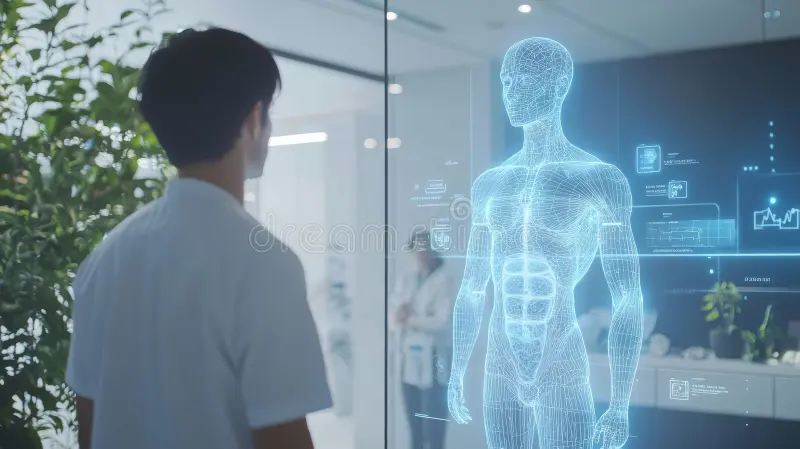
Imagine going to the doctor and instead of hearing, “Let’s try this medication and see what happens,” your doctor could first test that treatment on a digital version of your body.
Not a clone. Not a robot. Not a sci-fi avatar living in a computer.
A digital twin.
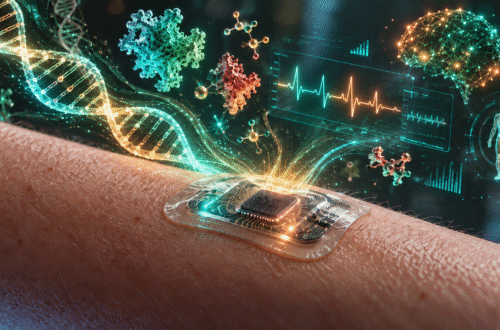
A medical digital twin is basically a virtual model of a patient, organ, tumor, or body system that is built using real data. The data for the digital twin could come from medical scans, lab results, wearable devices, genetic information, heart activity, or even your medical history. The goal is to make a model that can help predict how your body might respond before something is actually tested on your actual body.
And honestly, that could completely change the way medicine is.
For most of history, healthcare has been based on averages. Doctors use research studies, population data, clinical trials, and past experience to choose the best treatment for a patient. Of course, this is extremely valuable, but there is one major problem: all humans are not the same. Two people can have the same disease but respond completely differently to the same treatment. One patient might improve, whereas another might experience side effects, and another might not even respond at all.
That is where digital twins become so interesting.
Instead of only asking, “What usually works for most patients?” doctors could one day ask, “What is most likely to work for this specific patient?”
The idea of digital twins did not start in medicine. Engineers have used digital twins to model machines, buildings, airplanes, and factories. If a company wants to know how an engine might behave under stress, it can simulate it before a real engine breaks. If a city wants to test traffic flow, it can build a digital model before changing real roads.
Now scientists are trying to bring that same idea into biology.
Except there is one tiny problem: the human body is way more complicated than an engine.
A machine follows mechanical rules. Whereas a body is alive and is constantly changing. Cells communicate, genes turn on and off, organs influence each other, hormones shift, immune cells react, and diseases evolve. Even something as simple as a medication does not act in isolation, it really moves through the bloodstream where it could interact with organs, have effects on metabolism, and can also impact people differently based on their genetics, age, lifestyle, and health history.
So creating a digital twin of a human body is not easy at all. But that is exactly why AI matters.
Artificial intelligence can help and analyze huge amounts of biological and medical data much faster than humans can. It can find patterns in scans, compare patient histories, detect subtle changes, and help build models that update over time. A digital twin could combine both biological knowledge and AI prediction to simulate possible futures for a patient.
For example, imagine a patient with heart disease. A digital twin of their heart could be created using MRI scans, ECG data, blood pressure readings, and other clinical measurements. Doctors could then test how the heart might respond to different treatments, procedures, or medications. In cardiology, digital twins are already one of the most developed areas of medical twin research because the heart has electrical and mechanical patterns that can be modeled with data.
This could be especially useful for irregular heart rhythms. Instead of going straight into a procedure, doctors could use a patient-specific heart model to test where the rhythm problem might be coming from and which treatment strategy may work best. It would be like giving doctors a rehearsal before they operate on the real patient.
Cancer is another area where digital twins could become extremely powerful.
Tumors are not simple. They grow, mutate, resist treatments, and interact with the immune system. Two patients with the same type of cancer can have tumors that behave very differently. A cancer digital twin could use imaging, tumor genetics, biopsy results, and treatment history to help predict how a tumor might grow or respond to therapy.
Instead of trying one treatment after another, doctors could compare possibilities virtually first:
What happens if we use chemotherapy?
What happens if we use immunotherapy?
What happens if we combine treatments?
What if the tumor becomes resistant?
This does not mean the digital twin would magically know the perfect answer, but it could help doctors make more informed decisions.
That is the real promise of digital twins: not replacing doctors, but giving them a new way to see the patient.
Right now, medicine is often reactive. A person gets sick, symptoms appear, tests are done, and then treatment begins. But digital twins could help move healthcare toward prediction. If a digital twin notices patterns that suggest a disease may worsen, doctors could intervene earlier. If it predicts that a treatment might cause serious side effects, doctors could adjust the plan before harm happens.
It could also change clinical trials.
Today, clinical trials usually require large groups of real patients to test whether a treatment is safe and effective. Digital twins could one day help researchers run “virtual trials” before or alongside real trials. Scientists could simulate how different types of patients might respond, identify risks earlier, and design better studies. This would not eliminate the need for real human testing, but it could make the process smarter and more targeted.
Another exciting part is wearable technology.
Smartwatches, glucose monitors, fitness trackers, and other biosensors are already collecting real-time health data. Most of the time, this data is used in simple ways: heart rate, steps, sleep, oxygen levels, or alerts. But in the future, wearable data could continuously update a digital twin.
Your twin would not just be a one-time model. It could change as you change.
If your sleep worsens, your stress rises, your heart rate changes, or your glucose patterns shift, the model could adjust. This could make healthcare more personalized and more dynamic. Instead of seeing your health as one snapshot during a doctor’s appointment, your digital twin could help show the full movie.
However, there are major challenges.
First, digital twins need high-quality data. If the data is incomplete, biased, or inaccurate, the twin could make bad predictions. Biology is already messy, and medical data is even messier. Different hospitals use different systems, patients have missing records, and not all groups are equally represented in medical datasets. If a digital twin is trained mostly on data from one population, it may not work as well for everyone.
Second, privacy becomes a huge question.
A medical digital twin would contain some of the most personal information possible: your health history, genetics, scans, habits, risks, and biological patterns. Who owns that data? The patient? The hospital? The company that built the model? Could insurance companies misuse it? Could hackers target it?
If digital twins become part of medicine, protecting patient data will be just as important as building the technology itself.
Third, doctors need to trust the model.
In medicine, a wrong prediction is not just a computer error. It can affect a real person’s life. If a digital twin recommends a treatment, doctors need to understand how reliable that recommendation is. Researchers still need better ways to validate these models, measure uncertainty, and prove that digital twins actually improve patient outcomes.
That is why digital twins should not be seen as magical crystal balls.
They are tools.
Powerful tools, but still tools.
The future of digital twins will probably not be a perfect virtual body that knows everything. At least not anytime soon. Instead, it may start with smaller, more focused twins: a heart twin, a tumor twin, a lung twin, a metabolism twin, or a brain twin. These smaller models could help solve specific medical problems before scientists attempt to model the entire human body.
And honestly, that might be the better approach.
Because medicine does not need to become futuristic overnight. It just needs to become more precise, more predictive, and more personal.
The most exciting part of digital twins is not just that they use AI. It is that they could change the relationship between patients and treatment. Instead of waiting to see whether something works, doctors may one day be able to simulate, compare, and prepare.
A digital twin could help answer questions that medicine has struggled with for years:
Why does this treatment work for one person but not another?
Can we detect disease before symptoms appear?
Can we reduce trial-and-error in healthcare?
Can we treat the patient, not just the diagnosis?
Of course, we are not fully there yet. Digital twins still face technical, ethical, and clinical challenges. But the direction is clear. Biology is becoming more measurable. AI is becoming more powerful. Medicine is becoming more personalized.
The future of healthcare may not be one-size-fits-all.
It may be one-size-fits-one.
And maybe one day, before a treatment touches your real body, it will first meet your digital twin.